Know the Signs: When Breathing Changes May Be More Than a Cough

November is COPD Awareness Month. It is a good time to pay attention to how you breathe and notice when something has changed.
Chronic obstructive pulmonary disease, or COPD, is a long-term lung disease that makes it harder to move air in and out of the lungs. COPD includes emphysema and chronic bronchitis.
COPD often develops slowly. A person may notice that walking up the stairs is harder than it used to be, they are getting winded doing everyday activities, or they have a cough that never seems to go away.
It can be easy to think, “I’m just getting older,” or “I’m out of shape.” But a change in your breathing is worth paying attention to.
What are the signs of COPD?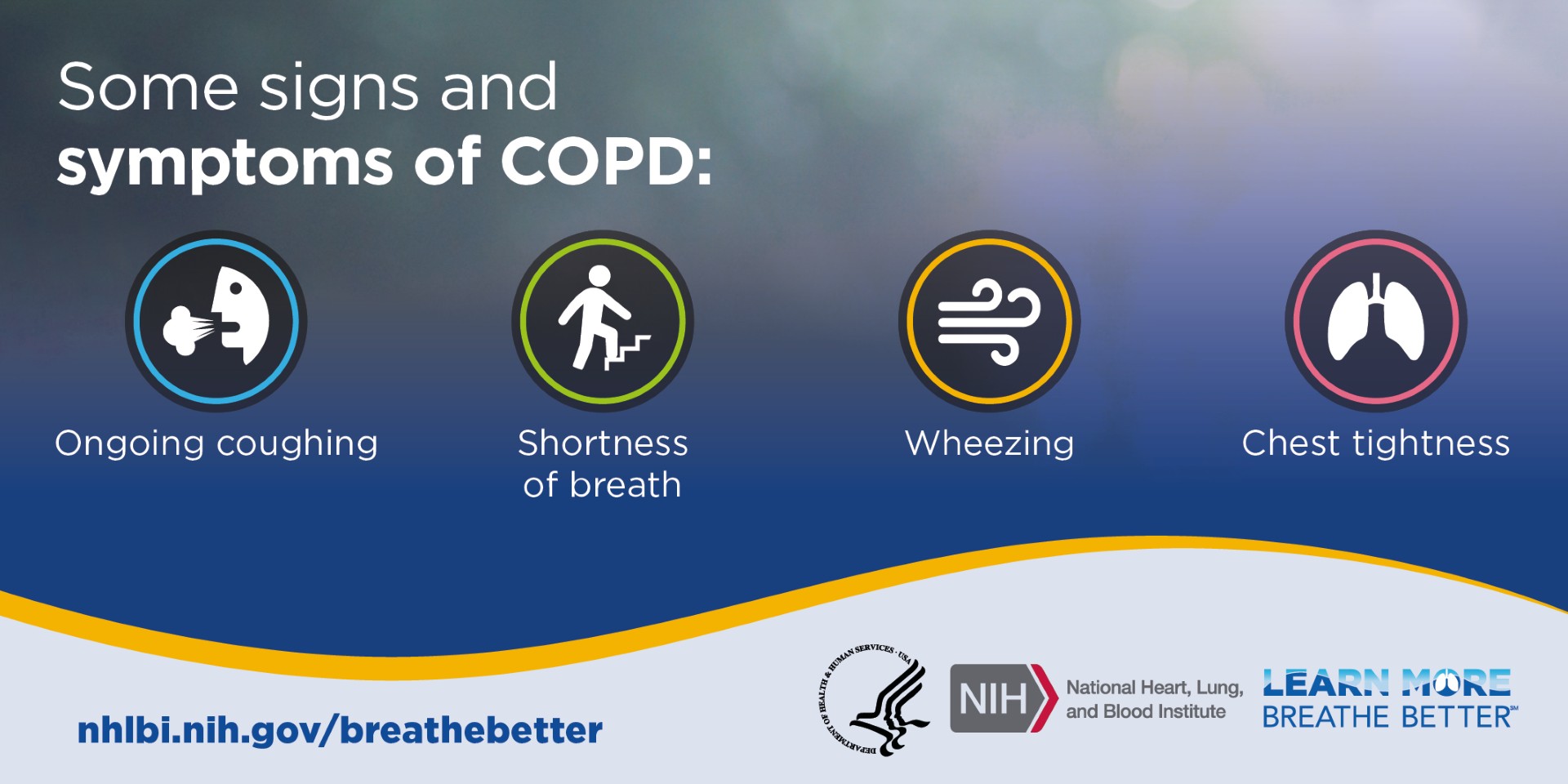
The National Heart, Lung, and Blood Institute lists several common COPD symptoms:
- Shortness of breath, especially during activity
- An ongoing cough
- Coughing up mucus
- Wheezing
- Chest tightness
- Feeling tired
You may also notice that you need to stop and rest when walking, cannot keep up with family or friends, or are avoiding activities because you are worried about becoming short of breath. These changes are worth discussing with your healthcare professional.
Don't ignore a lasting cough or breathing changes. A cough or shortness of breath does not automatically mean you have COPD. Other lung conditions can cause similar symptoms.
Asthma can cause coughing, wheezing, shortness of breath, and chest tightness. Symptoms may come and go or get worse with exercise, allergies, infections, or cold air. Harvard Medical School describes the main symptoms of asthma as “wheezing, coughing, and shortness of breath.”
Pneumonia is an infection in the lungs that can cause cough, fever, chills, shortness of breath, chest pain, and fatigue. Yale Medicine explains that pneumonia causes the air sacs in the lungs to become inflamed and may fill with fluid.
Lung cancer may not cause symptoms in its early stages. When symptoms do occur, they can include a cough that does not go away or gets worse, coughing up blood, chest pain, wheezing, shortness of breath, or unexplained weight loss.
The important thing is this: don't try to diagnose the cause yourself. If a cough or breathing change continues, talk with your healthcare professional.
COPD can be missed.
COPD does not always get diagnosed early.
A 2024 study published in the New England Journal of Medicine found that many people with COPD or asthma had not been diagnosed even though they had breathing symptoms. The study also found that people who received an early diagnosis and treatment had fewer visits for respiratory problems during the following year.
That is a good reminder that breathing changes should not simply be written off as getting older or being out of shape.
How is COPD diagnosed?
Your healthcare professional may ask about your symptoms, smoking history, family history, and exposure to things such as secondhand smoke, dust, fumes, or air pollution.
One of the main tests used to diagnose COPD is spirometry. During this simple breathing test, you take a deep breath and blow into a device as hard and fast as you can.
The National Heart, Lung, and Blood Institute calls spirometry the “main test for COPD.”
COPD can also occur in people who have never smoked. Smoking is an important risk factor, but it is not the only one.
When should you seek help?
Make an appointment with your healthcare professional if you notice:
- Shortness of breath that is new or getting worse
- A cough that will not go away
- Frequent mucus or phlegm
- Wheezing
- A decrease in how much activity you can do
- Repeated bronchitis or pneumonia
- Breathing problems that interfere with everyday activities
If you already have COPD, watch for sudden changes in your symptoms. Increased coughing, mucus, or difficulty breathing may be signs of a COPD flare-up and should be discussed with your healthcare provider.
Some breathing problems are emergencies. Call 911 if you are having severe trouble breathing, cannot catch your breath, or cannot speak normally because you are struggling to breathe.
Listen to your lungs.
Maybe you cannot walk as far as you used to. Maybe your morning cough has become an everyday cough. Maybe you are avoiding activities because you are afraid of getting short of breath.
These changes matter.
You do not have to figure out what is causing them on your own. Your healthcare professional can help determine whether your symptoms are related to COPD, asthma, an infection, another lung condition, or something else.
Finding COPD is the first step toward getting the care and support you need.
This COPD Awareness Month, know the signs. Pay attention to changes in your breathing. And if something doesn't seem right, talk with your healthcare professional.