Extreme Weather & Lung Health
Why Does Extreme Weather Matter?
New Hampshire is experiencing more frequent periods of extreme heat, heavier rainfall, longer allergy seasons, and occasional poor air quality from wildfire smoke. These changes can affect everyone's health, but they can be especially challenging for people living with asthma, COPD, allergies, and other lung diseases.
Understanding how weather and environmental conditions affect your lungs can help you prepare for changing conditions and reduce your risk of respiratory flare-ups.
How Extreme Weather Can Affect Your Lungs
Weather influences many of the environmental factors that affect respiratory health, including air quality, pollen, mold, and temperature.
Extreme weather can contribute to:
- Poor outdoor air quality
- Increased ground-level ozone
- Smoke from regional wildfires
- Higher pollen counts and longer allergy seasons
- Increased mold growth following heavy rain or flooding
- Heat stress that makes breathing more difficult
- Power outages that may affect air conditioning, air filtration, or medical equipment
For people with asthma, COPD, or other chronic lung diseases, these conditions may increase symptoms or trigger flare-ups.
Common Weather-Related Concerns in New Hampshire
Extreme Heat
Hot, humid weather can make breathing more difficult, particularly for people with chronic lung or heart conditions. Heat often coincides with higher ozone levels, creating an added challenge for sensitive individuals.
Wildfire Smoke
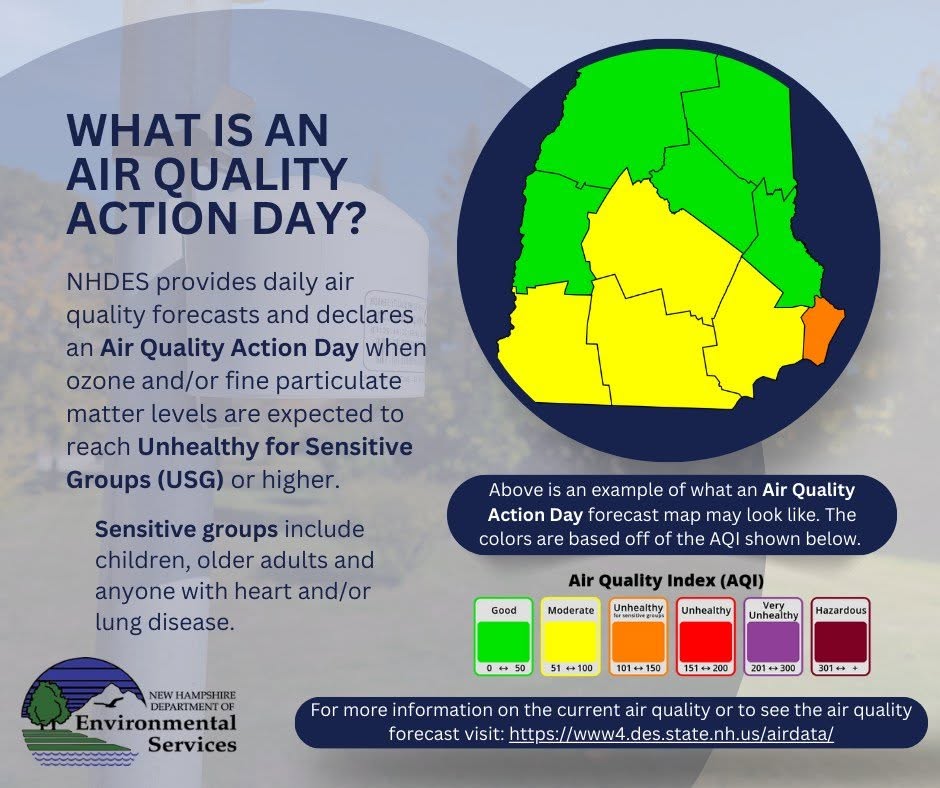
Smoke from Canadian wildfires has become an increasingly common source of poor air quality in New Hampshire. Fine particles in wildfire smoke can travel long distances and worsen respiratory symptoms, even when fires are hundreds of miles away.
Allergies
Warmer temperatures and longer growing seasons can extend the pollen season, increasing exposure to tree, grass, and weed pollen that can trigger allergies and asthma.
Heavy Rain and Flooding
Heavy rain can lead to water damage and mold growth in homes and buildings. Mold exposure may trigger allergy symptoms and worsen asthma or other respiratory conditions.
How to Protect Yourself
Preparing ahead of time can help reduce the health impacts of extreme weather.
Stay Informed
Check local forecasts for:
- Air Quality Index (AQI)
- Heat advisories
- Pollen forecasts
- Weather alerts
Knowing when conditions are changing allows you to adjust your activities before symptoms develop.
Have an Action Plan
Work with your healthcare professional to develop or update an asthma or COPD action plan. Keep prescribed medications available and know what steps to take if your symptoms worsen.
Create a Healthier Indoor Environment
During periods of poor outdoor air quality:
- Keep windows and doors closed when appropriate.
- Use air conditioning on the recirculate setting if available.
- Use a HEPA air cleaner if possible.
- Avoid smoking or vaping indoors.
Plan Outdoor Activities Carefully
When air quality is poor or temperatures are extremely hot:
- Limit strenuous outdoor activity.
- Exercise indoors when possible.
- Schedule outdoor activities for times when conditions are better, such as earlier in the morning during hot weather.
Prepare for Emergencies
Have a plan in case of severe weather or power outages.
Consider keeping:
- An adequate supply of medications
- Copies of prescriptions
- Contact information for healthcare providers
- Backup power plans for medical equipment, if needed
Building a More Resilient Community
Everyone benefits from cleaner air and healthier communities. Supporting efforts to reduce air pollution, improve emergency preparedness, and increase community resilience can help protect public health today and for future generations.