Outdoor Air Quality
What Is Outdoor Air Pollution?
Outdoor air pollution occurs when harmful substances enter the air we breathe. These pollutants can come from many sources, including vehicle emissions, power plants, industrial facilities, wood smoke, construction activities, and natural events such as wildfires.
Air pollution is often invisible, but it can still affect your health. On some days, pollution levels are low and pose little risk. On other days, weather conditions can trap pollutants near the ground, creating unhealthy air quality that may affect sensitive individuals and even healthy adults.
Two of the most common outdoor air pollutants are ground-level ozone and particle pollution.
Ground-Level Ozone
Ground-level ozone is a gas formed when pollutants from vehicles, power plants, and other sources react in sunlight. Ozone pollution is often highest on hot, sunny afternoons during the spring and summer months.
Breathing ozone can irritate the lungs, trigger asthma symptoms, and make it more difficult to breathe, especially during outdoor activity.
Particle Pollution
Particle pollution (also called particulate matter or PM) consists of tiny particles suspended in the air. These particles can come from:
- Vehicle emissions
- Wood smoke
- Wildfire smoke
- Industrial processes
- Construction activities
- Dust and dirt
- Pollen and other natural sources
Because many particles are extremely small, they can be inhaled deep into the lungs and may even enter the bloodstream.
Although New Hampshire generally experiences good air quality, pollution can still reach unhealthy levels due to weather conditions, ozone formation, and smoke transported from wildfires hundreds or even thousands of miles away.
Wildfire Smoke in New England
In recent years, smoke from large Canadian wildfires has periodically affected air quality throughout New Hampshire and the Northeast. Even if a wildfire is far away, smoke can travel long distances and significantly reduce air quality.
Wildfire smoke contains fine particles (PM2.5) that can penetrate deep into the lungs and enter the bloodstream. Exposure may cause:
- Coughing or throat irritation
- Burning or watery eyes
- Shortness of breath
- Chest discomfort
- Worsening asthma or COPD symptoms
- Increased risk of heart and lung problems, especially during prolonged smoke events
When wildfire smoke affects your area:
- Check the Air Quality Index (AQI) before spending time outdoors.
- Limit strenuous outdoor activities if air quality is unhealthy.
- Keep windows and doors closed when possible.
- Use air conditioning on the recirculate setting if available.
- Consider using a portable HEPA air cleaner to improve indoor air.
- Follow your healthcare professional's recommendations if you have asthma, COPD, or another chronic health condition.
Who Is Most at Risk?
While poor air quality can affect anyone, some people are more vulnerable to air pollution, including:
- People with asthma
- People living with COPD or other chronic lung diseases
- Individuals with lung cancer
- People with heart disease
- Infants and young children
- Older adults
- Pregnant people
- Individuals who work outdoors
- Children and adults who exercise outdoors
If you are part of a sensitive group, it is especially important to monitor air quality conditions and take precautions when pollution levels are elevated.
How Can Outdoor Air Pollution Affect Your Health?
Exposure to unhealthy air can cause both short-term and long-term health effects.
Short-Term Effects
- Coughing
- Wheezing
- Shortness of breath
- Chest tightness
- Irritated eyes, nose, and throat
- Reduced ability to exercise outdoors
- Increased asthma symptoms
Long-Term Effects
Repeated exposure to unhealthy air may contribute to:
- Reduced lung function
- Worsening asthma or COPD
- Chronic respiratory disease
- Permanent lung damage
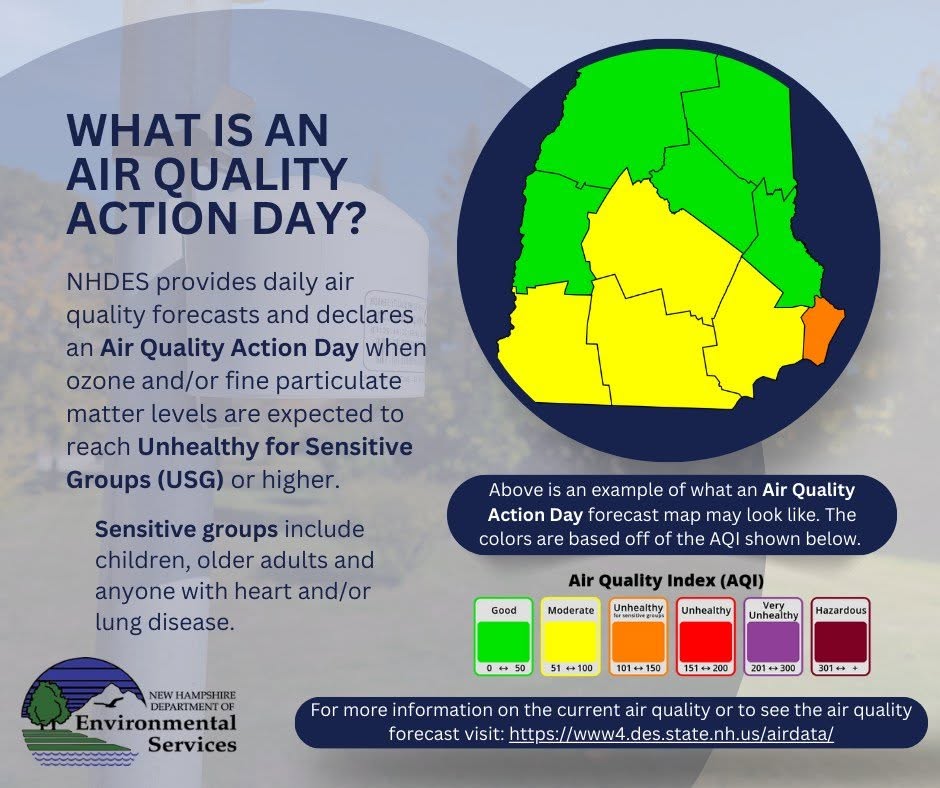
Understanding the Air Quality Index (AQI)
The Air Quality Index (AQI) is a tool used to communicate how clean or polluted the air is and whether pollution levels may affect your health.
In New Hampshire, AQI alerts may be issued because of:
- Ground-level ozone during hot summer weather
- Fine particle pollution (PM2.5)
- Smoke from Canadian wildfires
- Other weather conditions that trap pollutants near the ground
AQI values range from 0 to 500, with higher numbers indicating greater health concerns.
| AQI | Air Quality | Health Concern |
|---|---|---|
| 0–50 | Good | Air quality poses little or no risk. |
| 51–100 | Moderate | Air quality is acceptable for most people. |
| 101–150 | Unhealthy for Sensitive Groups |
People with lung or heart disease, children, older adults, and other sensitive groups should reduce prolonged outdoor activity. |
| 151–200 | Unhealthy | Everyone may begin to experience health effects. |
| 201–300 | Very Unhealthy | Health alert; everyone is at greater risk of health effects. |
| 301+ | Hazardous | Emergency conditions; avoid outdoor exposure whenever possible. |
Checking the AQI before spending extended time outdoors can help you decide whether it's a good day for outdoor work, exercise, or recreation.
What Can You Do When Air Quality Is Poor?
When air quality reaches unhealthy levels:
- Check the daily AQI before planning outdoor activities.
- Limit strenuous outdoor exercise or work.
- Move activities indoors when possible.
- Keep windows and doors closed.
- Use air conditioning or a HEPA air cleaner if available.
- Follow your healthcare professional's recommendations if you have asthma, COPD, or another lung condition.
- Keep rescue medications readily available if prescribed.
How You Can Help Keep Our Air Clean
Everyone can take small steps to reduce air pollution and support healthier communities.
- Don't smoke or vape, and avoid exposing others to secondhand smoke.
- Walk, bike, carpool, or use public transportation when possible.
- Reduce unnecessary vehicle idling.
- Keep your vehicle properly maintained.
- Conserve energy at home and work.
- Follow local burn restrictions and use wood-burning appliances responsibly.
- Plant and protect trees and green spaces that help improve air quality.
Small actions, when multiplied across a community, can help improve air quality for everyone.